From the essay: “History does not offer us much optimism because things can just as easily get worse as they can get better. But it can offer us a sense of much-needed surprise. Although we are meant to consider ourselves today as living at the pinnacle of modern progress and human civilisation, the past is actually not uniformly worse or better than the present. The past was just different; uncategorisable, unexpected. It offers us a sense of extended possibility; the possibility of being unstuck from what feels like the eternal damnation of seeing queer people such as Sarah Hegazy find no choice but to die. This is not to say history could have saved her, or could have saved anybody; it is not a cure for PTSD. Grieving her is not a teachable moment.
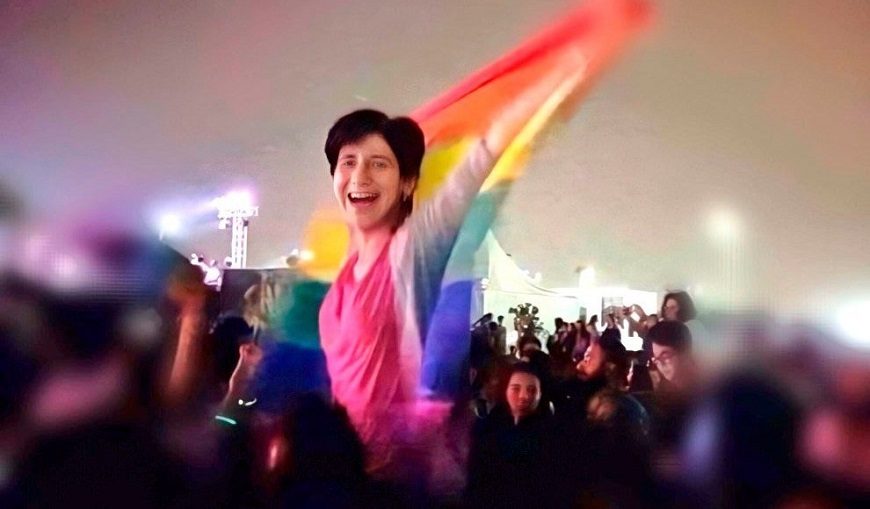
But it means that the pendulum can swing back in our direction, too. History is not really about finding the real culprits, the Arabs, the Brits, the imams, the empire. It is about using the space that is freed up by removing shame from the equation entirely – space for something more productive, such as agitating for our vision of a future. And that vision is not so far-fetched when you have done your reading. The first anniversary of Hegazy’s death was on 14 June 2021. Just as Egypt once freely sang the couplets of Abu Nuwas, let us sing today the queer punk-rock of Mashrou’ Leila. And let us say that we are not actually calling for a reformation – we are going back to our roots.”
How to cite: Aya Labanieh, “Queer and Arab,” Aeon, 7 September 2021 . Link.


 Aya Labanieh